
Cozy Maple Baked Beans
Updated: Aug 17
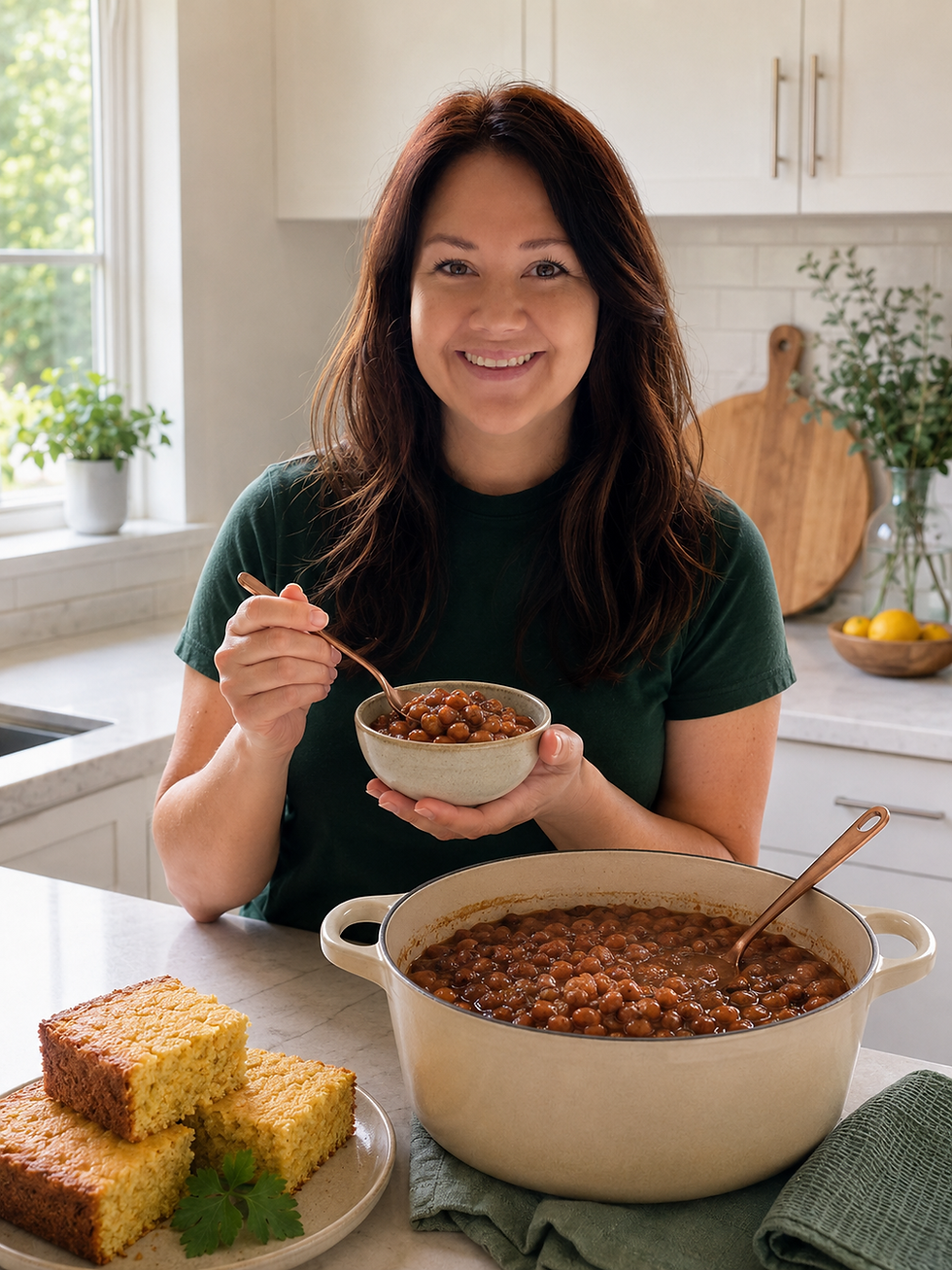
There’s something deeply comforting about a pot of slow-cooked maple baked beans gently simmering away in the kitchen. The aroma alone — warm maple, sweet molasses, tender onions — feels like home. This plant-based version honors the rich, traditional flavor profile of classic maple baked beans while keeping everything wholesome, hearty, and entirely powered by plants.
Perfect for weekend brunch, meal prep, potlucks, or a cozy dinner alongside crusty bread, these beans are thick, naturally sweet, and beautifully satisfying. Even better? They’re packed with fiber, plant protein, and key minerals that nourish your body while comforting your soul.
Let’s make a batch worth savoring.

Why You’ll Love These Maple Baked Beans
100% plant-based
High in fiber and protein
Naturally sweetened with maple syrup and molasses
Budget-friendly and meal-prep approved
Freezer-friendly
Rich, slow-cooked flavor
This recipe uses dried beans for the best texture and flavor. While it requires soaking and slow cooking, most of the time is hands-off — and the results are absolutely worth it.
Ingredients
Serves: 6–8
Prep Time:10 minutes (plus soaking)
Cook Time:6–8 hours slow cooker or 3–4 hours stovetop/oven
Main Ingredients
1 pound (about 2 ⅓ cups) dried navy beans or great northern beans
Water (for soaking and cooking)
1 medium yellow onion, finely chopped
¼ cup pure maple syrup
⅓ cup brown sugar (or coconut sugar)
2 tablespoons unsulfured molasses
2 tablespoons tomato paste
2 teaspoons dry mustard
1 teaspoon sea salt (adjust to taste)
2–3 cups fresh water (for cooking phase)
Step-by-Step Instructions
1. Soak the Beans
Rinse and sort the dried beans, removing any debris.
Place them in a large bowl and cover with water by about 2 inches.
Soak overnight (8–12 hours).
Soaking helps soften the beans, reduces cooking time, and makes them easier to digest.
2. Pre-Cook the Beans
Drain and rinse the soaked beans.
Transfer to a large pot and cover with fresh water.
Bring to a boil, then reduce to a simmer.
Cook for about 45 minutes, until slightly tender but not fully soft.
Drain and rinse again.
This step ensures creamy, evenly cooked baked beans later.
3. Build the Flavor Base
In a slow cooker or Dutch oven, combine:
Pre-cooked beans
Chopped onion
Maple syrup
Brown sugar
Molasses
Tomato paste
Dry mustard
Salt
2–3 cups fresh water
Stir gently until fully combined.
4. Slow Cook to Perfection
Slow Cooker Method
Cook on low for 6–8 hours, stirring occasionally if possible. Add a splash of water if the sauce thickens too much.
Oven Method
Preheat oven to 325°F (160°C).
Bring beans to a gentle simmer on the stovetop, then cover and transfer to the oven.
Bake for 3–4 hours until beans are tender and sauce is thick.
For a caramelized top, uncover during the final 30 minutes.
5. Rest & Serve
Let the beans sit for 10–15 minutes before serving — the sauce thickens beautifully as it cools slightly.
Serve warm with:
Whole grain toast
Roasted vegetables
A fresh green salad
Baked sweet potatoes
Plant-based breakfast spreads
Leftovers taste even better the next day.

Nutrition Facts (Approximate Per ½ Cup Serving)
Calories: 250–270
Protein: 8–10 g
Carbohydrates: 50–55 g
Fiber: 9–11 g
Total Sugars: 20–25 g
Fat: <1 g
Iron: ~15% DV
Magnesium: ~12% DV
Potassium: ~10% DV
Values vary slightly depending on sweeteners used.
Why These Ingredients Are Good for You
Navy or Great Northern Beans
Beans are nutritional powerhouses.
Benefits:
High in fiber – Supports digestion and gut health
Rich in plant protein – Helps build and repair tissues
Stabilizes blood sugar – Fiber slows carbohydrate absorption
Supports heart health – Contains potassium and magnesium
May reduce cholesterol levels
The soluble fiber in beans feeds beneficial gut bacteria, helping improve microbiome balance and overall digestive wellness.
Pure Maple Syrup
Real maple syrup isn’t just a sweetener — it contains beneficial compounds.
Benefits:
Contains antioxidants that help reduce oxidative stress
Provides manganese, important for metabolism and bone health
Less processed than refined white sugar
Used in moderation, it adds depth of flavor and subtle complexity.
Molasses
Molasses is often overlooked, but nutritionally it shines.
Benefits:
Rich in iron, supporting healthy red blood cells
Contains calcium and magnesium for bone strength
Provides potassium, supporting heart and muscle function
For plant-based eaters especially, molasses can contribute helpful trace minerals.
Onion
Onions bring both flavor and wellness benefits.
Benefits:
High in antioxidants like quercetin
Supports immune function
Contains prebiotic fibers that nourish healthy gut bacteria
Cooking onions slowly enhances their natural sweetness while maintaining many beneficial compounds.
Tomato Paste
Tomato paste adds body, acidity, and vibrant color.
Benefits:
Rich in lycopene, a powerful antioxidant
Supports heart health
May reduce inflammation
Concentrated source of vitamin C and potassium
Cooking tomatoes increases lycopene availability, making this slow-cooked dish even more beneficial.
Dry Mustard
Dry mustard adds gentle tang and depth.
Benefits:
Contains selenium, important for immune health
May support metabolism
Adds flavor complexity without extra sodium or fat
How This Dish Supports Overall Health
1. Digestive Health
With nearly 10 grams of fiber per serving, these beans help maintain regular digestion and support beneficial gut bacteria.
2. Steady Energy
The combination of complex carbohydrates and fiber helps prevent energy spikes and crashes.
3. Heart Health
Beans are linked to improved cholesterol levels and better blood pressure regulation due to their potassium, magnesium, and soluble fiber content.
4. Plant-Based Protein
Each serving provides meaningful protein without saturated fat or cholesterol.
5. Budget & Sustainability Friendly
Beans are affordable, shelf-stable, and environmentally sustainable compared to animal proteins.
Tips for Perfect Baked Beans
If beans seem firm after cooking, continue simmering — older beans can take longer.
Add water gradually if sauce thickens too quickly.
For deeper caramelization, finish uncovered in the oven.
Freeze in airtight containers for up to 3 months.

Storage & Reheating
Refrigerator: Store up to 5 days in a sealed container.
Freezer:Freeze up to 3 months.
Reheat:Warm gently on stovetop with a splash of water.
The flavor intensifies beautifully over time.
A Comfort Food That Nourishes
These maple baked beans strike that perfect balance between cozy and nourishing. They’re sweet but not overpowering, rich yet wholesome, and deeply satisfying without being heavy.
Whether you serve them at brunch, enjoy them as a protein-packed lunch, or spoon them alongside roasted vegetables for dinner, this plant-based classic delivers both flavor and nutrition in every bite.
There’s something magical about simple ingredients transforming slowly into something so hearty and comforting. A humble bag of dried beans becomes a pot of deeply flavored goodness — proof that nourishing food doesn’t need to be complicated.


Made these in the crockpot yesterday. Recipe says 2 to 3 cups water and I used 2 1/2. A little looser than expected so but they were delicious and will make again for fellowship next Sabbath.
I love all your recipes, I use your cookbook a lot. I find your recipes easy and tasty, I wish you would write another one!
Oh I’m making this one!